Thursday, February 20, 2014

Livebinders for the Social Studies - Part 3


Livebinders for the Social Studies - Part 3:  Collecting and organizing lesson plan resources 

Now that you have had a chance to see some excellent Social Studies Livebinders and see how they are used, let's move on to the third Livebinders for the Social Studies post - collecting and organizing lesson plan resources.  I have also created a new Livebinder, Livebinders for the Social Studies, to show examples and work along side everyone as we go start going more in-depth into Livebinders:


Getting Organized

Livebinders provides a central location for all of your resources that you may have.  Regardless if you use Evernote, Dropbox, Google Docs or Microsoft programs such as Word or Excel, you can store those resources all in one Livebinder for quick and easy organization.  If you would like to add documents, pictures, etc to your binder, go to the "view" menu and click on "edit".  From there, click on "Add Content" and choose the type of content you would like to add.      


Livebinders also has a easy way to add documents from your Dropbox account and your Evernote account. 

To add files from your Dropbox account, simply click on "Add Content" then click on "My Dropbox".   


For material from your Evernote account, you can add the link via the Livebinders app or get the URL to the note or notebook and insert it into the tab or subtab of your choice.  Click here to read the recent blog post from the Livebinders blog about the Evernote addition to the Ipad App.  


Collecting Digital Resources
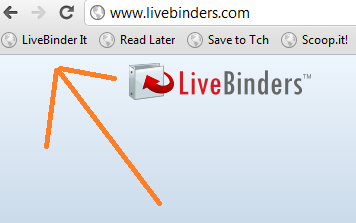
As educators, we run across multiple resources while searching the web.  Thanks to Livebinders, you can collect, save and share all of those resources.  To get started collecting your digital resources, the first thing you'll want to do is install the "Livebinder It" bookmarklet tool, click here to go to that page at www.livebinders.com.  
 Once you have installed the bookmarklet tool and found a website you would like to add to your binder, simply click on "Livebinder It" and a new window will pop-up allowing you to select which binder to add it to:


Need to see some of this in action?  Please feel free to visit the Livebinder at the beginning of this post, Livebinders for the Social Studies.  I will be working on it going forward with the next posts so stay tuned! 


Tuesday, February 11, 2014

5 Excellent Windows Apps to Learn Code

The Windows Store provides excellent apps for writing and learning coding.  If you have a Windows PC or tablet (such as the Microsoft Surface) that runs Windows 8.1, you can get some really good apps to further develop your coding skills.  Here are 5 great coding apps in the Windows Store to get you started:

Code Writer is a great coding app that lets you create documents for HTML, Javascript, CSS, etc.  Once you create that new document, you can save it in SkyDrive.  According to the Windows store, "Over 20 syntax-highlighted file types supported including HTML, CSS, JavaScript, XML, C#, VB, C++, ASP, PHP, Markdown, Perl, Python, Ruby, SQL, and many other common languages".  (apps.microsoft.com)  

HTML Programs is a Windows app that gives you a visual of how certain things should look in HTML code. It starts by showing you some of the basics in HTML and then goes into more advanced coding such as lists, forms and tables.  There is already sample code in the app so this would work great if you just need to quickly have a reference of certain areas in HTML.  

HTML Master is a well-done Windows coding app.  This app provides literature over the basics of HTML, exercises to get hands-on with HTML and quizzes to test what you have learned.  If you are just starting your coding journey, you should definitely download this app and give it a try.

HTML School is a excellent app to get started with coding in HTML.  Providing literature on the basics of
HTML and also a coding editor, it is a solid app that will guide you to learning code quickly and efficiently.


HTML Playground is a app that lets you code with HTML, CSS and Javascript.  If you basically need a "playground" where you can input code and immediately see how it looks all within the same app, this app has you covered.  This app is great if you have some knowledge of HTML, CSS and Javascript and want to get your hands on doing the coding.  


Friday, January 31, 2014

Livebinders for the Social Studies - Part 2


Livebinders for the Social Studies - Part 2: 5 Excellent Social Studies Livebinders to see

On this second part of the Livebinders for the Social Studies series, I thought we should look at 5 excellent Social Studies Livebinders to get you familiar with how other educators and enthusiasts use Livebinders in the Social Studies field.  

Social Studies Resources Central

This Livebinder from GValdez is full of resources to use.  It has everything from History resources, Economic resources, graphs and virtual field trips.  
Social Studies Resources Central

A House Divided

Andrew Weber has put together a excellent binder, which was voted as one of the top ten Livebinders in 2012.  If you need resources for the Civil War period in American history, this is the Livebinder for you.  It has everything from vocabulary, readings and online tools.  
A House Divided

Ipad Apps for Social Studies

Looking for Social Studies Ipad apps?  Then this Livebinder from Angela Cunningham (@kyteacher) has you covered.  It has app categories from History, Civics and Government and Geography.  
iPad Apps

Black History Month

This is a wonderful Livebinder put together by kb...konnected.  It is full of lesson plans, printables and other resources regarding Black History month.  
Black History Month––Martin Luther King Jr.Day

Lewis & Clark

This is a excellent Livebinder from wisermar covering resources over the Lewis & Clark Expedition.  If has everything you'll need to cover this lesson in class - webquests, maps and clip art images.   

Sunday, January 26, 2014

Livebinders for the Social Studies - What are Livebinders?


Livebinders for the Social Studies - Part 1: What are Livebinders?

For over a year now, I have been guest posting a series of posts entitled "Evernote for the Social Studies" on notanotherhistoryteacher.edublogs.org, a blog by Melissa Seideman.  There are still a multitude of uses that Evernote holds for Social Studies teachers and students that I have yet to blog about, and more posts will be coming on that subject throughout the year.

Along with Evernote, I have been blogging about Livebinders and how they can further engage our students in the classroom and assist educators in the teaching process.  This year, I also wanted to look at how Livebinders can be used specifically in the Social Studies classroom.

I will also be cross-posting this series on notanotherhistoryteacher.edublogs.org.  If you have yet to follow that blog or follow Melissa Seideman on Twitter (@mseideman), now would be a great time.  Melissa has also posted excellent posts about Educational Technology and Social Studies related resources.

Livebinders - Your 3-ring binder for the web

Livebinders can be your one central source to collect resources, share resources, and collaborate with other educators and technology enthusiasts.  You can collect and curate resources that include: web addresses, documents, photos and many other things in your Livebinder.

In today's classroom, students and teachers use the power of the internet to gather resources for projects, resources for papers and resources to share in the classroom.  According to livebinders.com, "Physical 3-ring binders used to be the easiest way to organize all your educational resources. But now so much of what you want to organize is online. LiveBinders not only replaces the old 3-ring binder, but also opens up new opportunities for collaborating, organizing, and sharing that were never possible before."     


Here are some of my favorite ideas that students can use Livebinders for:


  1. Collect/organize blog posts - their own or fellow classmates
  2. Create a "My Evernote" tab - students can insert links to certain Evernote notes
  3. Research - students can use the "Livebinder It" browser extension to add a website link to their binder
  4. Comment on fellow classmate's binders - Livebinders allow you to add comments to a binder, which is great for peer review. 
  5. Upload lecture notes - whether it be a Evernote note link or a MS Word doc, students can upload/insert their class lecture notes.
Why Use Livebinders?

There a multiple reasons to use Livebinders in and out of the classroom.  It's free and very easy to use.  The creators of Livebiners, Tina and Barbara (@livebinders), provide the best support I've ever experienced with anything related to technology.  They love to share other's Livebinders and love to hear how what they created is making a difference.  


The problem with physical 3-ring binders is that resources and learning that has been done and collected with them stay in the binder.  Students have less of a opportunity to share what they have learned with physical binders, however, with Livebinders students can share via Twitter, Facebook, or by URL - thus giving students a multitude of ways to share with their fellow classmates.   

Want more Livebinders info?  Here are some more resources:


Click here for my other blog posts about Livebinders

Livebinders website: www.livebinders.com


Here is one of my Livebinders for Social Studies resources:


Saturday, January 25, 2014

5 Free Nook Math Apps for Kids

Here are 5 free math apps for your Nook HD + and Nook HD that students in your classroom could use to help them with them with their Math skills:

Math Racer  

Math Racer Addition is a fun math game for kids that requires the player to add different numbers.  At the beginning, the player gets to choose the color race car they want and choose the numbers that want to play with (1's, 2's, 3's, 4's, etc).  If the player chooses to play with 1's, the game will ask the player to do addition with 1's - i.e. 1+2, 1+3, 1+10, etc.  Each time the player gets the answer right, their race car advances to the "finish line".  It will track their score and time so that the player can keep track and try to beat their record.  

Math Brain Trainer offers levels of difficulty in levels of addition (Easy, Medium, Hard).  Each level gives you a time clock which you must beat by selecting two numbers that add to the given target for that level.  For example, the target number is 16, thus you could select two eights in order to move on to the next target.  It also includes classical music that you can turn on or off that runs in the background while you play the game.  


Monkey Math - Jetpack Adventure is a fun game for kids to practice their math skills.  You control the main character of the game (which is a monkey on a jetpack) as he races across the "Enchanted Islands of Arithmetics" to stop the evil rogue, "Mean Monkey" from stealing ancient treasures of the island.  The game is a side-scrolling adventure where you must count numbers in order to make it to the end of the level.  


Mult Mania is another side-scrolling game which you must control the character and answer multiplication questions in order to reach the end of the level.  This free version contains multiplication tables for 10X, 5X, 2X, 4X and 9X.  According to the notes for the game, this game was created by a veteran middle school teacher.  


Kinder Zoo is a game that lets kids build on their math, counting and spelling skills.  Students will follow the in-game directions (verbal or on-screen) as they guide the zoo keeper to the right answer.  For example, in the "number identification" game the in-game prompter will tell the player to identify, for example, the number "3".  The player will then draw a path for the zoo keeper to the animal that has the number "3" on it.

Friday, January 17, 2014

Create excellent and easy rubrics with Rubistar


Rubistar, a free tool from 4teachers.org, is a great way to make simple and easy to use Rubics to use in your classroom.  

With Rubistar, you can start creating rubrics for several different projects. Whether it be for class debates, creating maps or posters, putting together a brochure or even making a timeline, Rubistar gives you a starting point for multiple areas.  So depending on what type of activity or project you will be doing, you can make it work for your needs.  

For this example, I've chosen to do one for a Timeline.  

Once you have chosen what kind of rubric you would like to create, you can then start customizing it with your name and project title: 


From there, you can start building the rubric by choosing the category:


To make it even easier, you have multiple selections to choose from on the category, such as: preparation, resources, content/facts, etc.  Once you have made your selection, Rubistar will populate four description areas on what makes for a great score and a poor score.  Of course, you can customize the descriptions and headings to what you want.  

Once you are all done, you will be given your finished product:


You will now have the option to print, save or download as a Excel spreadsheet.  Or, if you would like you can also clip the webpage with Evernote.  


Wednesday, November 20, 2013

New Livebinders Feature


If you are looking to get your class involved with Livebinders, it's now easier than ever.
  
Livebinders recently announced a new feature that allows students under the age of 13 to now sign up for a Livebinders account with their teacher's email address.

This new feature now opens the door for all students, regardless of age, to have a Livebinders account.  Of course, please refer to the Livebinders "Privacy Policy" prior to walking your students through the registration process.

How to have students sign up for a Livebinders account:

Here's a quick rundown of how to direct students to sign up on Livebinders.com:

Have students go to www.livebinders.com.  Then have them click on "sign up":


Once they get to the sign up page, have them click on "yes" where it says "student signing up with teacher's email address":


Once they click on "yes", they will get two different boxes - "Teacher's Email Address" and "Please Retype Teacher's Email Address".  At this point, they can enter the teacher's email address instead of their own.  You'll want to do this if you have any students under the age of 13:

Conclusion

I can not speak the praises of Livebinders highly enough.  When I first started to become involved in Educational Technology, Livebinders is where I started.  The whole point of Educational Technology is to get students more engaged in the learning process...Livebinders is a perfect start to allow your students to build, grow and engage as they learn in your classroom.  

Learn more about Livebinders at www.livebinders.com or feel free to look through the multiple posts I have on this blog about Livebinders.